

How to Identify My Hair Type Full Guide 2026
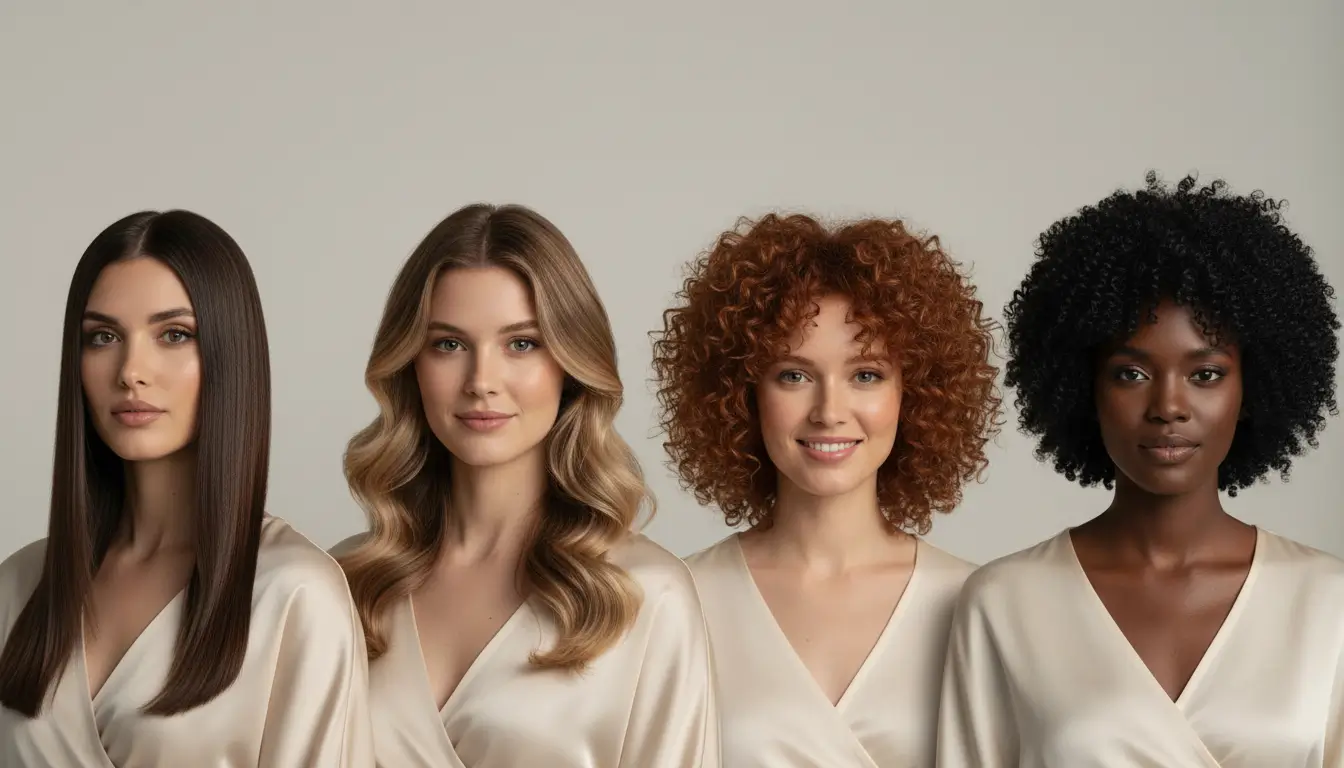
How to Identify Your Hair Type (1, 2, 3, and 4)
How to identify my hair type is a question many people ask after buying products that simply don’t work.
Have you ever bought a product everyone raved about, only to find it did nothing—or worse, made your hair greasy, frizzy, or flat? The problem isn’t the product—it’s that you might not know your true hair type.
In this guide, you’ll learn exactly how to identify my hair type using the Andre Walker System (Types 1, 2, 3, and 4), plus subcategories and care tips for each.
Let’s get started.
How to Identify My Hair Type in 3 Simple Steps
Before you begin, make sure your hair is completely free of products. No gels, no creams, no serums. Even leftover conditioner can affect the results.
To understand how to identify my hair type, follow these three simple steps:
| Step | What to Do |
|---|---|
| Step 1 | Wash your hair with a clarifying shampoo. Do not use conditioner or any other product afterward. |
| Step 2 | Let your hair air dry completely. Do not use a blow dryer, and do not touch or comb your hair while it dries. |
| Step 3 | Once your hair is 100% dry, look at it in a mirror. Observe the shape of your strands from the roots to the ends. |
Now, compare what you see with the descriptions below. This is the most important part of how to identify my hair type accurately.
Type 1: Straight Hair
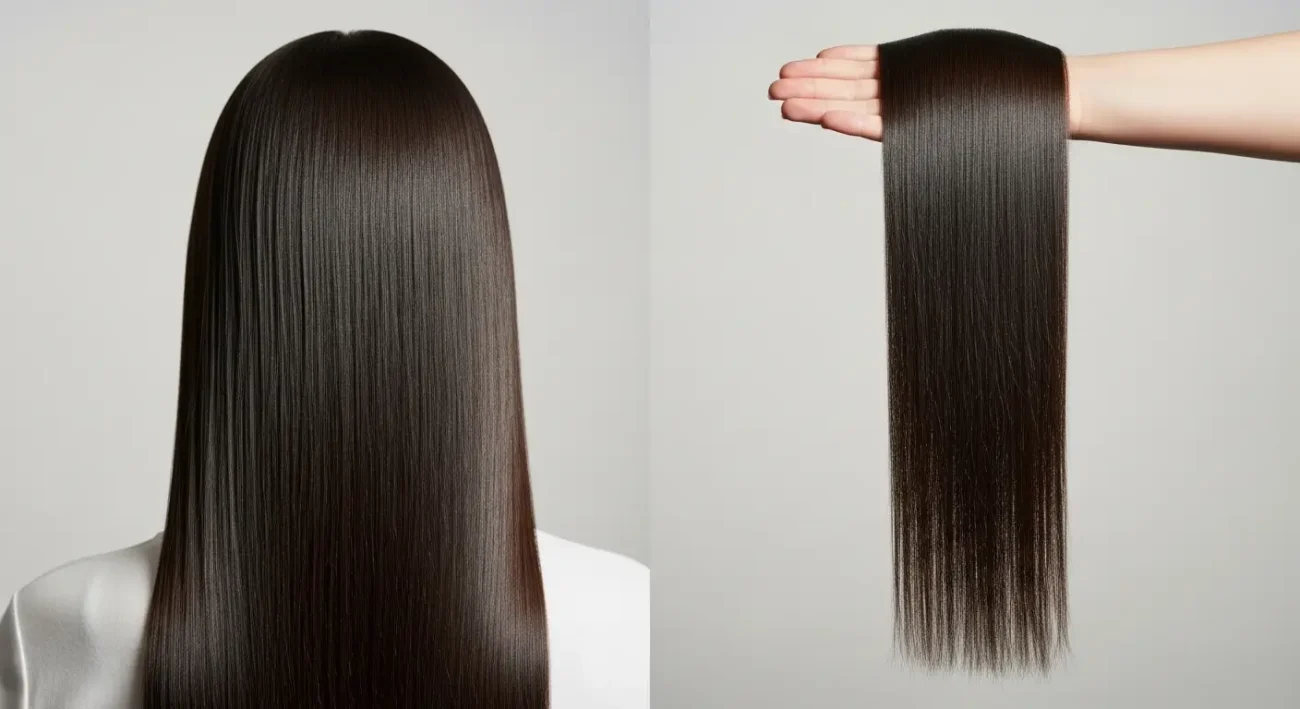
Type 1 hair lies flat against the scalp from root to tip. It has no curl or wave pattern. When you look at a single strand, it is completely straight.
If you are asking yourself how to identify my hair type, Type 1 is the easiest to recognize.
Common Characteristics
- Reflects light easily, giving it a natural shine
- Becomes oily quickly because sebum travels easily down the straight shaft
- Struggles to hold curls or updos
Subcategories
| Subtype | Description |
|---|---|
| Type 1A | Very fine and silky. Completely straight. Does not hold any style. |
| Type 1B | Straight with a slight bend at the ends. More texture than 1A. |
| Type 1C | Straight but thick and coarse. Has more body and holds styles better than other straight types. |
Quick Care Tips
Use lightweight, volumizing products. Avoid heavy creams and oils that will weigh your hair down. Wash regularly to manage oil buildup.
Read next: Complete Guide to Caring for Type 1 Hair (coming soon)
Type 2: Wavy Hair
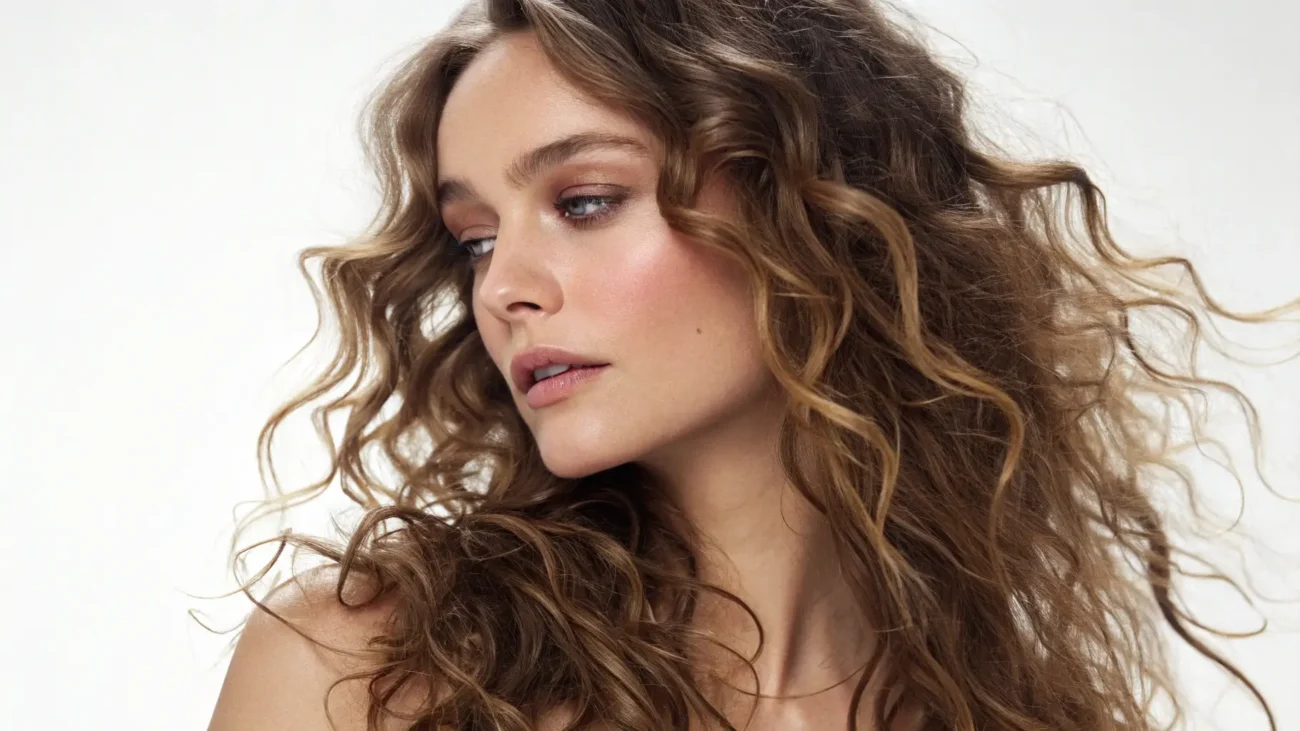
Type 2 hair has a defined S-shaped pattern. It is neither straight nor fully curly. The waves usually start around the eye level or below.
When you learn how to identify my hair type, look closely at the shape of these waves.
Common Characteristics
- Falls somewhere between oily and dry
- Prone to frizz, especially in humid weather
- Can look straight if weighed down by heavy products
Subcategories
| Subtype | Description |
|---|---|
| Type 2A | Fine and loose waves. Easy to straighten. Often looks straight when brushed. |
| Type 2B | More defined S-shaped waves. Frizz is common around the crown and ends. |
| Type 2C | Thick, coarse waves. The waves are well-defined, and some curls begin to form. |
Quick Care Tips
Use lightweight moisturizers. Avoid heavy butters and oils. A light mousse or gel can help define waves without weighing them down.
Read next: A Complete Guide to Wavy Hair Types (2A, 2B, and 2C)
Type 3: Curly Hair
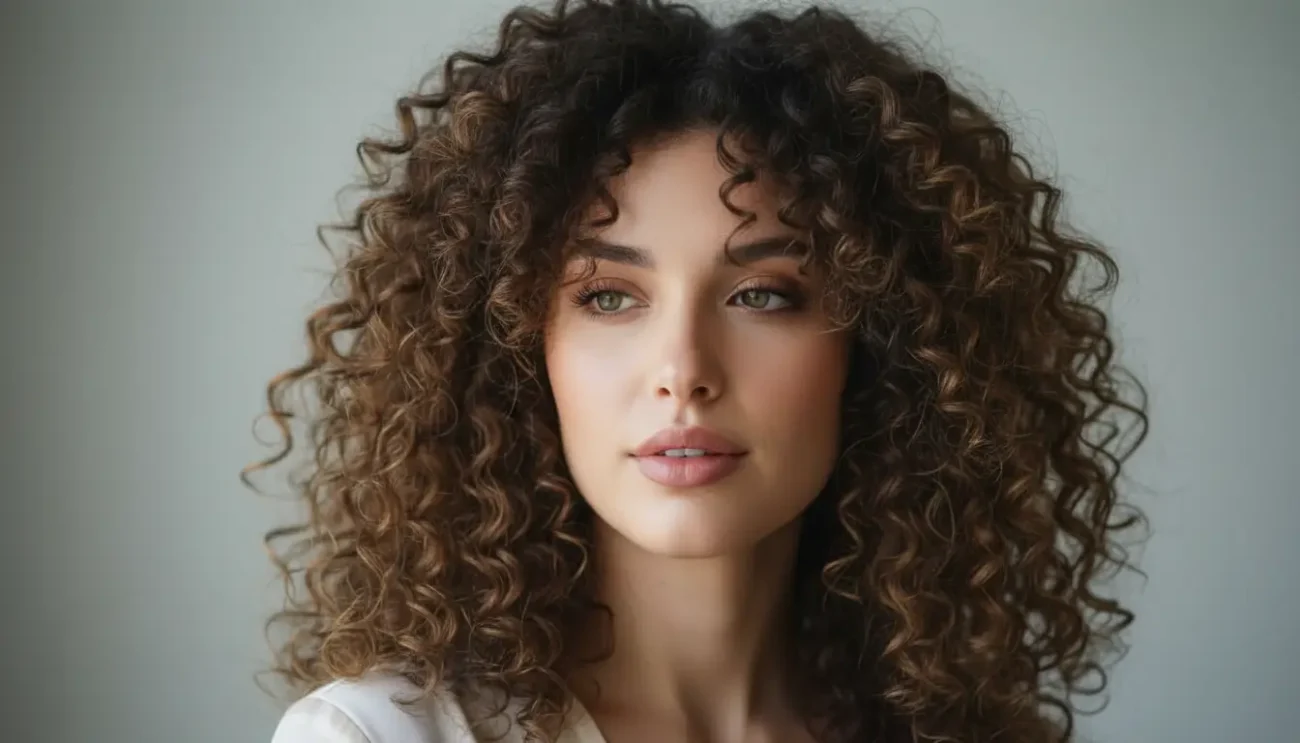
Type 3 hair forms distinct ringlets or spirals. The curls have a clear looped pattern and can range from loose to tight.
To master how to identify my hair type, pay attention to whether your strands form complete circles.
Common Characteristics
- Naturally dry because natural oils struggle to travel down the curly shaft
- Prone to frizz and shrinkage (hair appears shorter than it actually is)
- Requires significant moisture and careful handling
Subcategories
| Subtype | Description |
|---|---|
| Type 3A | Loose, large ringlets. About the width of a piece of chalk. Soft and shiny. |
| Type 3B | Tighter ringlets. About the width of a marker pen. More volume and density than 3A. |
| Type 3C | Very tight corkscrew curls. About the width of a pencil. Dense and springy. |
Quick Care Tips
Moisture is everything. Use sulfate-free shampoos, rich conditioners, and leave-in creams. Avoid brushing dry hair—detangle only when wet with a wide-tooth comb.
Read next: Complete Guide to Caring for Type 3 Hair (coming soon)
Type 4: Coily / Kinky Hair
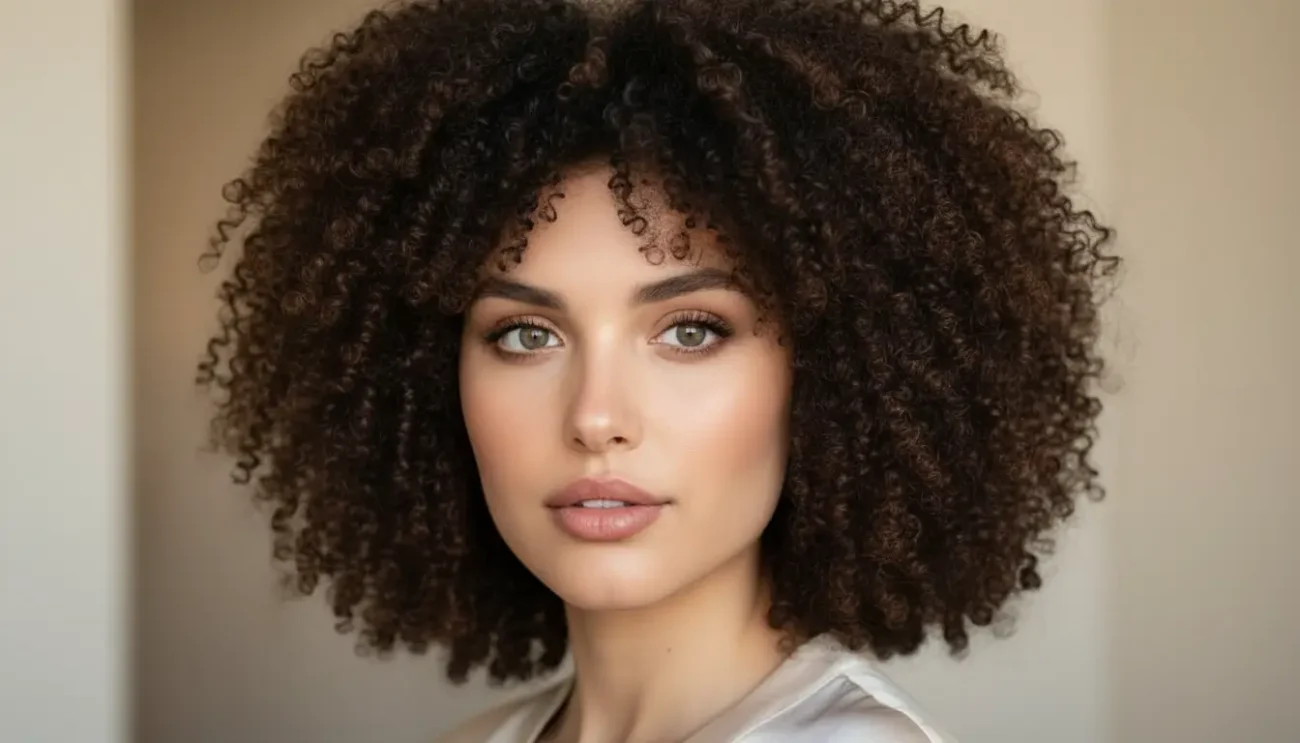
ype 4 hair has a very tight curl pattern. The strands may form sharp Z-shaped angles or tight coils. This hair type is the most fragile and delicate.
If you want to understand how to identify my hair type, Type 4 is distinct due to its tight coil pattern.
Common Characteristics
- Extremely dry and prone to breakage
- High shrinkage (can shrink up to 75% of its actual length)
- Requires the most moisture and gentle handling
Subcategories
| Subtype | Description |
|---|---|
| Type 4A | Tightly coiled S-shaped pattern. Has a visible curl definition. Soft to the touch. |
| Type 4B | Z-shaped zigzag pattern. Less curl definition than 4A. More prone to dryness. |
| Type 4C | Similar to 4B but with no visible curl definition. The most fragile and delicate texture. |
Quick Care Tips
Focus on deep conditioning and sealing in moisture with natural butters (shea, mango) or oils. Protective styles (braids, twists) help prevent breakage. Be gentle when detangling.
Read next: Complete Guide to Caring for Type 4 Hair (coming soon)
Quick Reference Chart
| Hair Type | Shape | Key Challenge |
|---|---|---|
| Type 1 (Straight) | Flat, no bend | Oiliness, lack of volume |
| Type 2 (Wavy) | Loose S-shape | Frizz, balance of moisture |
| Type 3 (Curly) | Defined ringlets | Dryness, shrinkage |
| Type 4 (Coily/Kinky) | Tight coils or Z-shape | Breakage, extreme dryness |
What’s Next?
Now that you know your hair type, you can finally choose products and routines that actually work for you.
Each hair type has unique needs:
- Type 1 needs lightweight, volumizing products
- Type 2 needs balanced hydration without heaviness
- Type 3 needs deep moisture and frizz control
- Type 4 needs intense hydration and gentle handling
FAQ: How to Identify Your Hair Type
You can identify your hair type by observing its natural pattern after washing and air drying. Look at whether it is straight, wavy, curly, or coily.
The main hair types are Type 1 (straight), Type 2 (wavy), Type 3 (curly), and Type 4 (coily or kinky), based on the Andre Walker system.
Products may fail because they are not suitable for your specific hair type, texture, or porosity.
Yes, hair type can change due to hormones, aging, heat damage, or chemical treatments.
Wavy hair forms loose S-shapes, while curly hair creates defined loops or ringlets.
Use products designed for your hair type, avoid excessive heat, and maintain a consistent care routine.
Final Thoughts
Knowing how to identify your hair type is the first step toward healthy, beautiful hair. Don’t be discouraged if your hair doesn’t fit perfectly into one box—many people have a mix of patterns.
Use this guide as a foundation, and adjust based on what works for you.
Remember: the best hair routine is the one that works for your unique hair. Now that you can determine your curl pattern, you are ready to build a routine that truly serves your hair’s needs.